The Forest Absolute: New Era

Updated: Sep 10
By Marcos Ezequiel
As you may have noticed in the post Mini-Minimalism: The History Of RaritieS Collection, where I portray my personal stories and analyses through artistic creations, taking the RaritieS - Mini France (5x5) artwork as a starting point, I highlight that music is one of the powerful tools to influence us, whether positively or negatively. In that post, I showed how the song "Voyage Voyage" by Desireless makes me dream of better days. Today, I can say that the Black Eyed Peas' song, "Where Is The Love?" puts me in a reflective state of mind. What happens in my case is that, when I hear this sound, the question I ask myself is, "where is the world going wrong when it comes to climate vulnerabilities and assisting the most vulnerable amidst these tensions?"
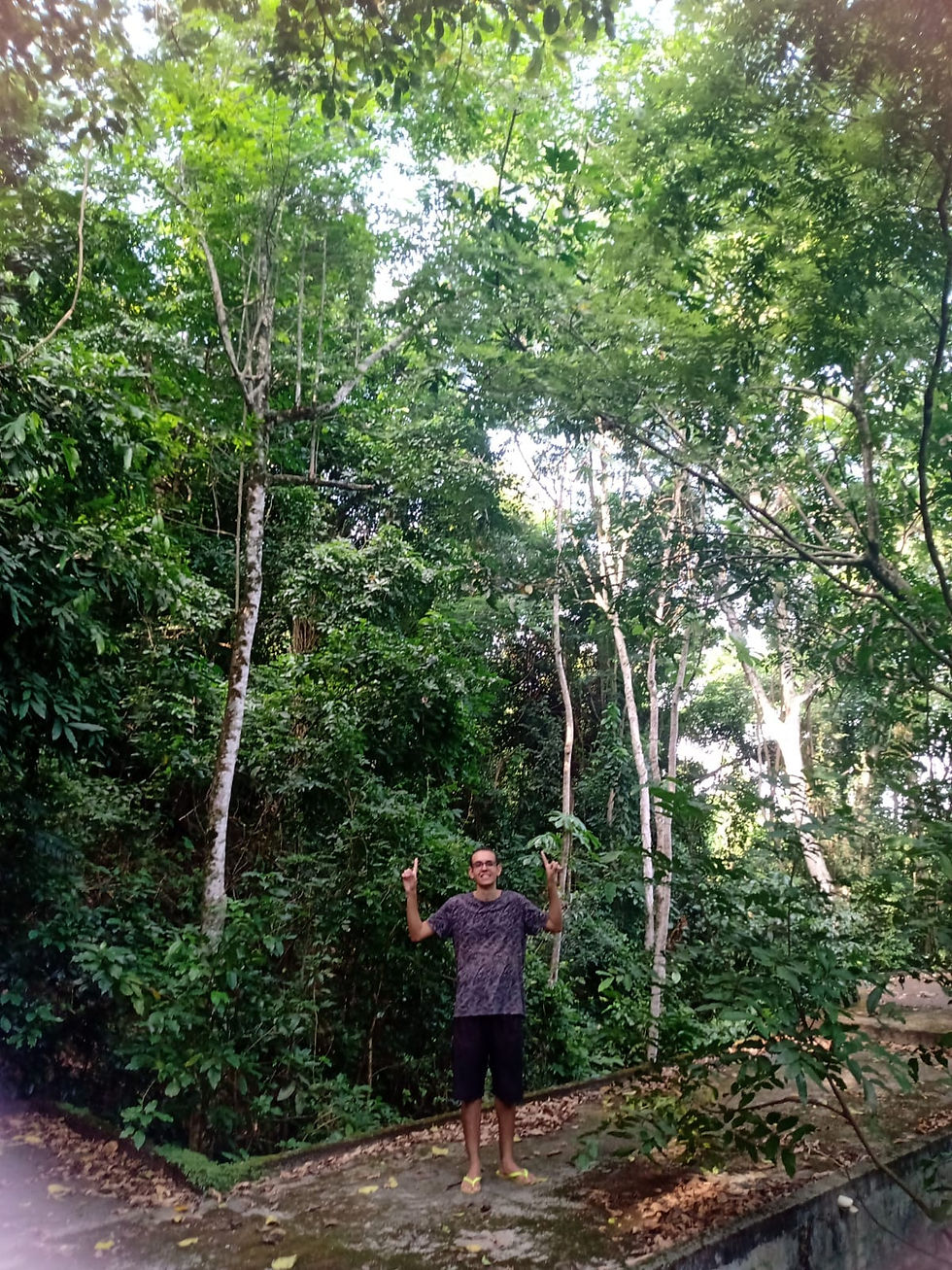
Image 1: This boy in the photo is me. This photo was taken by my mother in January 2022, during one of our many visits to the Pedra Branca State Park, even before I dreamed of creating the entire artistic project that you know today.
1 - The Physical Root: 12.000 Hectares of Urban Resistance
The genesis of this shade of green does not stem from a digital palette; it is born of the soil, the humidity, and the silent breathing of Pedra Branca State Park (Parque Estadual da Pedra Branca). Spanning 12.000 hectares of dense urban rainforest in Rio de Janeiro, this sanctuary ranks among the world's largest urban forests—a living green lung entirely encircled by the encroachment of gray concrete.
Traversing these locations over the years provided more than just a personal refuge; it offered a profound lesson in spatial tension. Another detail I cannot overlook is that my mother (Sandra Nascimento) pinpointed the geographic location of each area starting precisely from the vantage point shown in Image 2—which you are about to see.

Image 2: The Adutora Veiga Brito aqueduct crossing the canopy of Parque Estadual da Pedra Branca, December 29, 2024. Photographic archive by the artist.
(A monumental civil engineering axis originating at the Lameirão Pumping Stationin Santíssimo, traversing Jardim Sulacap toward Jardim Botânico, intersecting the forest).
What she subtly revealed to me was the chaotic growth of the metropolis and, amidst it all, the forest standing alongside power transmission towers (two of which appear in Image 2). Thanks to this field analysis, the color green became the biological anchor for the entire RaritieS Collection.

Image 3: Telephoto study of the iconic "Pedra do Osso" and "Jesus Vem" granite formations with the dense rainforest below, December 29, 2024.
(An architectural contrast between ancient geological structures and the living biomass serving as the chromatic source for the collection).
2 - Climate Vulnerability and Accessibility
Research conducted during this intellectual journey—drawing on the United Nations Environment Programme (UNEP) [1] and global human rights initiatives [2]—reveals that people with special needs face disproportionate risks during climate-induced disasters and extreme weather events. Physical, informational, and institutional barriers often hinder emergency evacuation protocols, access to shelters, and long-term rehabilitation resources. Unfortunately, these changes further entrench threats, exacerbating existing inequalities and undermining the individual autonomy of human beings.
While people with disabilities face these challenges, small-scale family farming—a cornerstone of regional food security and sustainable land management—suffers significant disruptions caused by unpredictable rainfall, soil erosion, and severe temperature fluctuations (particularly sea temperatures), all compounded by structural access limitations [3, 4]. When rural infrastructure disintegrates—crumbling like a sheet of A4 paper in flames (a vivid reminder of the care required to value these systems and protect the autonomy of every individual involved)—farming families caring for people with special needs experience an intensification of systemic hardships.
Protecting the land and safeguarding human dignity are two non-negotiable dimensions of the same socio-environmental commitment, which my mother showed me not only through visits to parks in Rio de Janeiro, but also through the contacts we have had and continue to have with people with physical and intellectual limitations in evangelical churches since 2021.
3 - The Mini-Minimalist Synthesis: From Biome to Human Support
The three forest artworks, taken in high resolution (1200x1600 px), bring meaning to the two artworks, see below:
The MiniM artwork, represented by a green cross, conveys climate awareness and resistance against constant soil degradation, as well as reinforcing the integration between humans and nature.

Figure 1: RaritieS - MiniM, 3x3 px native grid, digital asset.
(Enlarged preview for pixel grid integrity)
The Mini Movement (Founder Edition) artwork completes this process. I chose the color green here as a subtle extension of MiniM to further reinforce the idea that the art I create must hold philosophical meaning. Without this search for purpose, I cannot prompt reflection; after all, I dislike creating anything in a haphazard way.

Figure 2: RaritieS - Mini Movement (Founder Edition), 1x1 px native grid, digital asset.
(Enlarged preview for pixel grid integrity).
You can see the full story behind the two artworks in the post "Mini-Minimalism: The History Of RaritieS Collection."
Amidst the work I have shared with you—showcasing my expressions of thought—I return to the question I posed in the introduction: "Where is the world going wrong when it comes to climate vulnerabilities and assisting the most vulnerable amidst these tensions?"
My answer is that nature conservation, assistance for people with disabilities, and the inclusion of families in the context of family farming should in no way be separated. If we treat these three issues as isolated topics, we will never be able to fulfill our responsibilities with excellence.
I would go even further: I fully support agrarian reform that prioritizes people with disabilities and their families and extends globally—especially in the developed world (particularly the United States and Switzerland)—while also mandating that a portion of the land be set aside for environmental preservation.
I mention the United States because its vast territory offers ample scope for this; Switzerland, with its direct democracy—in which citizens vote annually on important issues—and the countless bunkers found across its small territory, faces the problem of agricultural abandonment and the exodus of young people from rural areas to urban centers.
Ultimately, all of this shares a common thread: valuing human beings alongside ecological preservation.
4 - Post-Sale Philanthropic Commitment
Statement for The Forest Green: New Era Unified Lot (5 Works):
Guided by this philosophy, we—as a movement—have established that the acquisition of this unified five-part lot, affectionately named "The Forest Absolute: New Era", will directly support international organizations dedicated to accessibility, pediatric rehabilitation, and the inclusion of people with disabilities, as well as family farming associations in the Federal District; we believe that changing the climate reality for vulnerable populations is only possible if we help those who need it most.
We will allocate 20% of the gross revenue from the historic sale of this Lot—which includes three photographs of the Pedra Branca State Park biome (1200x1600 pixels of Atlantic Forest), compressed into the artworks "RaritieS - MiniM" (3x3 pixels, #2e7e00) and "RaritieS - Mini Movement (Founder Edition)" (1x1 pixel, #228b22)—to support institutions dedicated to assisting people with disabilities and family farming associations in the Federal District (Brazil). Accessibility and Rehabilitation (15%):
AACD (Brazil) - 10%
Inclusión Activa - 2%
ASPACE Sevilla - 1.5%
Fundación Andaluza Accesibilidad y Personas Sordas - 1.5%
Family Farming and Rural Sustainability (5%):
AMISTA (Associação Mista dos Agricultores Familiares, Orgânicos e Produtores Rurais do DF e Entorno) - 2,5%
Banking Intermediary and Custodian Agent:
Deutsche Bank will be responsible for mediating donations, allocating 15% to organizations working on behalf of people with disabilities and 5% to family farming associations in the Federal District (Brazil).
References & Institutional Documentation
[1] United Nations Environment Programme (UNEP). "How climate change disproportionately impacts those with disabilities". UNEP News and Stories. Available at: [unep.org/news-and-stories/story/how-climate-change-disproportionately-impacts-those-disabilities] (https://www.unep.org/news-and-stories/story/how-climate-change-disproportionately-impacts-those-disabilities)
[2] Global Citizen. "How Persons With Disabilities Are Vulnerable to the Climate Crisis". Global Citizen Issues. Available at: [globalcitizen.org/en/content/how-persons-with-disabilities-are-vulnerable] (https://www.globalcitizen.org/en/content/how-persons-with-disabilities-are-vulnerable/)
[3] Climate Policy Initiative (CPI). "Apenas 15% dos agricultores familiares no Brasil têm acesso a crédito rural". CPI Press Release. Available at: [climatepolicyinitiative.org/pt-br/press-release/apenas-15-dos-agricultores-familiares-no-brasil-tem-acesso-a-credito-rural] (https://www.climatepolicyinitiative.org/pt-br/press-release/apenas-15-dos-agricultores-familiares-no-brasil-tem-acesso-a-credito-rural/)
[4] Observatório do Clima. "Aquecimento tem impactos mais severos na agricultura familiar". Observatório do Clima. Available at: [oc.eco.br/aquecimento-tem-impactos-mais-severos-na-agricultura-familiar] (https://oc.eco.br/aquecimento-tem-impactos-mais-severos-na-agricultura-familiar/)


Comments